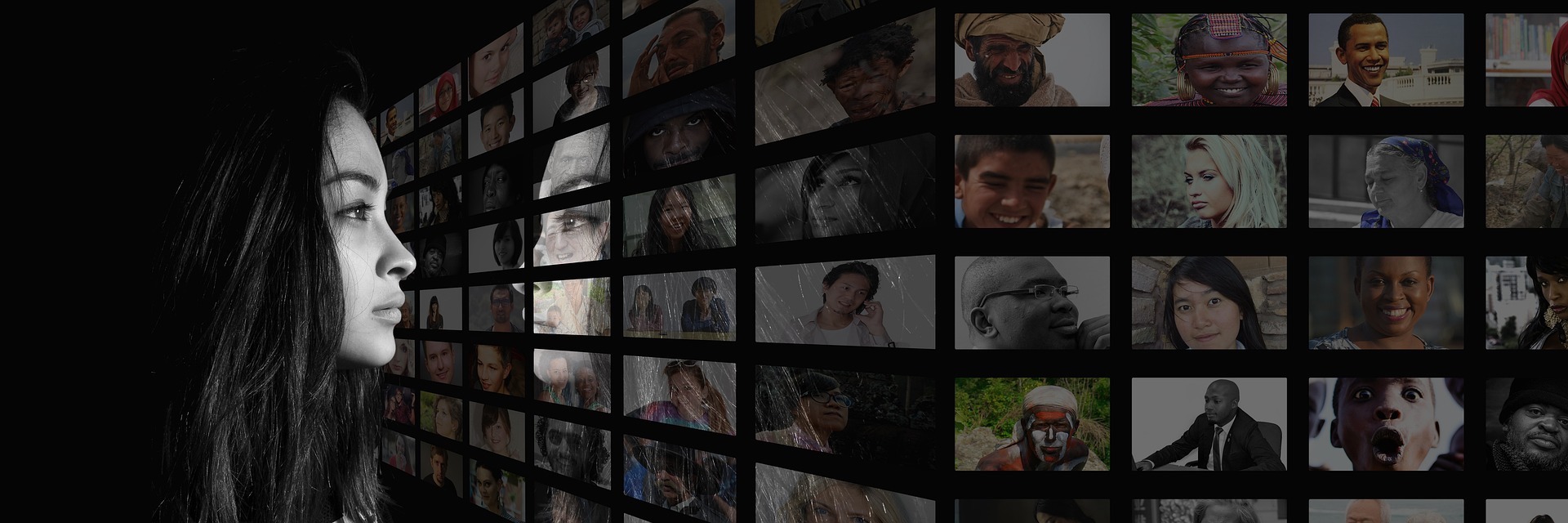
The Beauty Paradox
If the Real World Is Learning to Accept Us, Why Are Social Filters Teaching Us Not to Accept Ourselves?
This article forms part of The Eyes Don't Lie, Youmanity's international awareness campaign and photographic project exploring the impact of digital culture on body image and adolescent well-being.
Sometimes, scientific research does more than answer questions—it reveals contradictions that define our time.
Two landmark studies by our scientific partner, Dr. Neelam Vashi, expose one of the most surprising paradoxes of the digital age.
In 2017, Dr. Vashi's research showed that beauty standards in the real world had been changing for the better. Over the previous three decades, ideals of beauty had gradually become more inclusive, embracing greater diversity in age, ethnicity and natural appearance. Even the cosmetics industry had begun shifting its focus away from hiding imperfections and towards enhancing individuality. Society seemed to be moving, however imperfectly, towards a simple but powerful message:
You don't have to look like someone else to be beautiful.
Then, just one year later, Dr. Vashi introduced a term that would become recognised around the world: Snapchat Dysmorphia.
Her work described a growing phenomenon in which people no longer asked cosmetic surgeons to help them resemble celebrities, but instead wanted to look like the filtered versions of themselves.
The timing is striking.
Just as the real world was beginning to celebrate authenticity, the digital world was quietly promoting the opposite. Social media filters offered faces with flawless skin, sculpted noses, larger eyes and perfectly symmetrical features. Instead of celebrating individuality, they rewarded conformity, encouraging millions of young people to compare themselves not with reality, but with digitally manufactured ideals.
It is one of the defining contradictions of our generation. While society has worked for decades to broaden its understanding of beauty, algorithms have compressed it once again into a single, polished template.
For organisations like Youmanity, this presents an enormous challenge.
For more than twenty years, our work has focused on helping young people recognise that their differences are not flaws to be hidden but qualities to be valued. Parents, teachers and communities have worked tirelessly to nurture confidence, resilience and self-acceptance. Yet every day, many teenagers encounter digital environments that quietly suggest the opposite: that acceptance comes only after correction.
This understanding also resonates deeply with the work of our scientific partner, Dr. Giovanni D'Alessandro, author of The Mirror Is Not Enough. His research reminds us that when a young person becomes distressed by their appearance, the real struggle often lies far beyond the reflection in the mirror. The face is rarely the problem. More often, it is the relationship with oneself that has become fractured.
It was from this shared understanding that The Eyes Don't Lie / Gli Occhi Non Mentono was born.
The exhibition is not an attack on technology or social media. Instead, it is an invitation to pause and reflect.
Where filters erase individuality, these photographs seek to restore it.
Each portrait reveals a face that carries its own history, emotions and humanity. The only part left untouched is the eyes—the one place where authenticity still resists digital perfection. They remind us that behind every carefully edited image is a real person longing to be seen, accepted and understood.
Perhaps that is the real lesson hidden within Dr. Vashi's research.
The future of beauty does not depend on creating more convincing filters. It depends on raising a generation that understands its worth before reaching for one.
Because confidence is not born from becoming someone else.
It begins the moment we discover that who we already are is enough.
Cover photo by Geralt/Pixabay